Potential Slashes to Narcan Funding

According to CBS, the Trump Administration is thinking about cutting Narcan funding due to slashes in Department of Health funding. They have proposed getting rid of $56 million in Narcan funding for emergency departments. This $56 million grant is used to train emergency personnel how to administer Narcan. This grant is given out by the Substance Abuse and Mental Health Services Administration (SAMHSA), which would also be dissolved if this grant continues through. The loss of this grant could exacerbate the opioid crisis, according to Hanna Sharif-Kazemi, the federal policy manager for the Drug Policy Alliance. I’ve attached further reading below.

What do you think?

SOURCES:

https://www.cbsnews.com/news/overdose-deaths-narcan-naloxone-harm-reduction-samhsa-trump-cuts/

https://www.cnn.com/2025/04/30/health/naloxone-grant-budget-cut-overdose-prevention

State Assembly 2025 Recap

Coping with Grief Over the Holidays

I think everyone can understand that the holidays, typically a joyful and merry time, are hard for those who have lost a loved one. Here are some things you can do to cope with grief over the holidays:

  1. Don’t isolate yourself
    • While it may seem easier to just cancel the holiday altogether, it’s important to balance yourself with social events
    • It’s totally okay to say no to some things but don’t completely isolate yourself
  2. Allow yourself to grieve
    • Everyone has a unique way to grieve
    • Recognize & understand that there is no right or wrong way to grieve
    • It’s okay to feel joy during the holidays
  3. Self-care
    • Rather than face masks or spa days, self care in the form of exercise, good sleep, less alcohol, & more can be really beneficial to your mental health and help create peace during the holiday season
  4. Create a new tradition
    • If you find continuing on a tradition that you used to do with a lost loved one, create a new one that accommodates the situation and your family

In summary, the most important thing to remember during a tough holiday season is that everyone has a different reaction to grief and there is no right or wrong way to grieve. Take some of the suggestions above and remind yourself that it’s okay to feel joy, sadness, and/or anger during this rough time. Remember your loved one but also remember to take care of yourself and those around you.

SOURCE:

https://www.vitas.com/family-and-caregiver-support/grief-and-bereavement/holidays-and-grief/coping-with-grief-during-the-holidays

The Effect of Natural Disasters on Mental Health

Florida is known to be a magnet for hurricanes and natural disasters which have wrecked homes, towns, and scenery for years. I currently live in south Florida and Hurricane Milton has just come by. School was cancelled for 3 days and the Hurricane has taken over social media and the news. There was lots of fear going into this hurricane, with the news stating things like “This hurricane has reached the mathematical limit of what the atmosphere can produce.” Tampa was hit hard by the hurricane, and even near me (far out of the direct path of the hurricane) schools have been destroyed and people have died. It’s obvious to see that the effects of hurricanes and other natural disasters are monumental. People can lose loved ones, their homes, and possessions. I keep seeing videos on the news where parents and family members are asked to write the DOB and name on children and loved ones in marker so that they can be identified in the case of an emergency. The thought of that, coupled with perhaps having to evacuate, or with the financial and emotional fear of losing a home, has to be very hard on the mind.

An impactful quote I found to summarize this thought is: “Natural disasters are large-scale catastrophic events, and they are increasing in frequency and severity. Converging evidence indicates that the mental health consequences of disasters are extensive and are often associated with trauma and the disruption of personal and socioeconomic factors in people’s lives. Although most individuals experiencing disaster-related traumatic events do not develop mental illnesses, some experience adverse psychological effects of disasters. These mental health effects begin immediately following a disaster and may persist for extended periods.”

My heart goes out to anyone suffering from Milton or any other natural disasters in the world. It is no easy thing to go through.

SOURCE:

State Assembly This Year vs Last Year

So far, I’ve been in two Youth in Government for two years and have been to two State Assembly’s. My most recent State Assembly was in April. My state assembly experience last year, in 2023, was honestly very nerve-wracking and not fun. I did not participate much at all, and I found it stressful and scary. My bill was not good my first year, in addition, so it got killed in first committee. This year, I found State Assembly exciting, fulfilling, and participated a lot. I think the main difference between my first and second year was the experience of the first year. That sounds very vague, but what I mean is that I didn’t know what State Assembly looked like and did not feel prepared for what it was. Going into my second year, I knew what I was going into and felt prepared. I wish that I was better prepared for my first year because those 3 days were long and tiring and I didn’t feel like I got anything out of State Assembly that year. But this year my bill made it to Cabinet and I spoke up a lot more. In conclusion, this year was much better and it can only go up from here!

State Assembly 2024 Update

Hey guys! I am back from my first day of school after State Assembly! The 67th State Assembly took place in Tallahassee from April 10-12, 2024. It went super well this year! I’ll give a detailed day by day analysis of the trip and I will do a separate post later about what I learned about policy!

Day 1- April 10:

  • 4:45 am: wake up, get dressed and ready
  • 5:30 am: arrive at YMCA and get on bus
  • 6:00 am: get on the road! we were on a school bus (😭) which got crowded and uncomfortable after a while. the bus ride up was really fun though because everyone talked and played games (after a couple hours to nap and fully wake up of course!)
  • 4:00 pm: finally arrived! we went straight to the church where opening ceremonies and first committee was hosted. opening ceremonies consisted of welcoming speeches, handing out of bill books, and then after an hour, dismissal to program areas.
  • 5:30: dismissal to first committee. the high school kids were split up into the senate and the house of representatives this year. so there were two chambers made up of high school kids, and multiple different committees for each chamber. i was in the senate, and i was in senate committee 5. there were about 7 or 8 committees for the senate and around 13 or 14 kids in each senate committee. first committee is when all bills have the chance to be heard. as explained in my state assembly info for beginners post, opening and closing statements are 90 seconds and then there is a round of non-debatable, technical questions (NDTQ’s). Following the NDTQ’s, there is a con-pro-con sandwich round of debate. after all this, delegates are given a ranking sheet to rank bills on (the lower ranked a bill is, the better it is).
    • My bill also had a testimonial, which means that someone in the executive branch saw my bill, liked it, and then offered to sponsor it in committees by writing an extra 45-second speech about why people should vote for a bill.
    • My experience was great in first committee this year. I participated so much, which I was so proud of myself for because last year I did not participate or speak up at all.
  • 7:45: dinner (pizza!)
  • 9:00: everyone’s bills are finished and have been heard. we head back to the hotel with our delegation.
  • 9:30-12: shower, relax, eat candy, talk with roomies, paint nails!
  • 12:15: bedtime 😴

Day 2- April 11:

  • 7 am: wake up and get ready. the bill docket for the senate and the house was released at 7 as well! my bill was ranked 5 out of 18 bills that made it onto the docket!! only 18 bills made it onto the docket out of over 100! this was super exciting for me because not only did i make it onto the docket, but i was ranked 5 which meant that i would definitely get heard! bills take so long to go through in the senate that only 10 or 11 bills (if you’re lucky) get to be heard.
  • 7:30: onto the bus and headed to state capitol! the senate was in the historical senate chamber on thursday.
  • 9-12: debate bills. each senate bill takes about 20-30 minutes to go through. this year, we only got through 3 bills between when we started and when we took a break for lunch. i was also proud of myself for how much i participated in senate (which is around 50 or 60 people).
  • 12:15-12:45: lunch (sandwiches)
  • 1-5: debate more bills. my bill passed the senate, but the voting was really close. usually its majority for either nay or yea, but this time it was split half and half.
  • 5:15: dismissal and head back to hotels.
  • 5:30-6:30: get ready for gov bash!
  • 7-9:45: gov bash! gov bash is basically a break from all the hard work we do during the day and a chance to hang out and dance! gov bash is always at an antique car museum. in addition, gov bash is when the candidates running for youth governor give their speeches. there were 4 people running for youth governor this year.
  • 10-12: shower, get ready for bed! i also used this time to collaborate with someone from my delegation who sponsored my bill in the house. in order for a bill to be heard by the cabinet, it needs to be passed through the senate and the house. my bill had already passed through the senate, but it needed to pass through the house. only representatives can present a bill in the house, so i had to find someone willing to present. i had to prepare opening and closing speeches with him, as well as draft responses to questions that could be asked and responses to con arguments that could be said.

Day 3- april 12:

  • 7 am: wake up and get all packed up! we had to check out of our hotel in the morning.
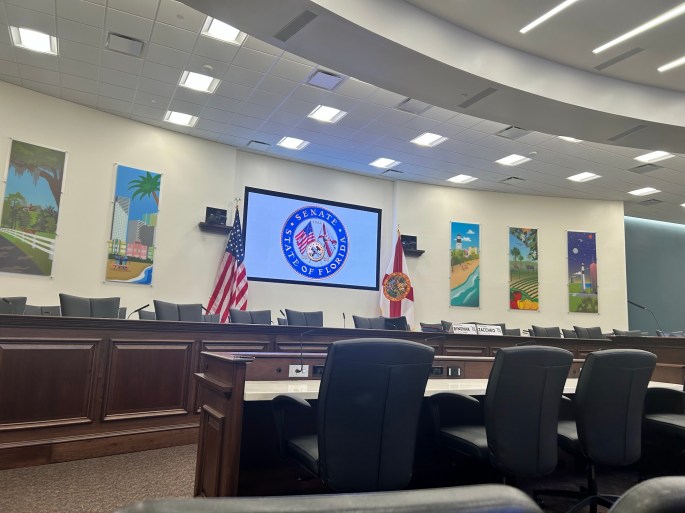
  • 8:30: arrive at capitol. the senate was in the modern house of representatives. it was super cool- there were buttons to vote on at your desk, as well as microphones.
  • 8:45: vote for presiding officers for the next year.
  • 9-12: debate bills in the senate. my bill was heard in the house during this time and passed!
  • 12-1: lunch.
  • 1:30-3:15: debate bills in the senate. during this time, around 2:30, i was called to be heard in the cabinet! i was the last person to be called into the cabinet because we all had to wrap up soon for closing ceremonies. the cabinet hearing went okay. looking back, i did not answer questions well and stuttered a lot. my bill had serious flaws, which i’ll talk about in a later post.
  • 4-5:30: closing ceremonies. here, everyone met up in a different church than on wednesday and the presiding officers all gave their speeches and announced who won the elections and who would be replacing them. everyone is sad but ready for state assembly to be over because it is sooo tiring! also, the bills who had been passed or vetoed by the governor are announced. my bill got vetoed by the governor. i was a little sad but i totally understood why.
  • 6-1:30: bus ride back. i was exhausted and ended up sleeping a couple hours later at night but also chatted and went on my phone haha!

only 12 bills out of over 200 even made it into cabinet and i was honored to be one of those 12, even if my bill got vetoed!

  1. state assembly last year vs this year
  2. everything i learned about policy this year at state assembly
  3. advice for people participating in youth in government type clubs
  4. deep-dive into my bill and why it was flawed

State Assembly Update

Hey all! Just wanted to pop in to give a quick update on my bill for State Assembly (which is next week!) My bill is done and was submitted way back in February. I’ve been working on my opening and closing statements which will be given at the beginning of the Committee’s next week. And I feel pretty ready to go up to Tallahassee next week! I have two more Youth in Government meetings to go to and then the 3-day big trip. I am a bit nervous to speak up in front of everyone about my bill, but I feel like I’ve prepared and have learned lots since my last State Assembly. I’ll keep you updated on my journey with State Assembly and policy!

Check out my other site + my instagram!

I have another site called “spray 2 save”! It’s a nonprofit dedicated to educating high schoolers on how dangerous drug use is and how Narcan can save lives. I’m currently working on potentially hosting workshops or assemblies after/during school. On my Instagram, I post information and facts about Narcan as well as updates about events that I’m participating in! Thanks!

Youth in Government/State Assembly

Youth in Government is a mock-government club sponsored by the YMCA’s of the US. In Florida, every year, there is a State Assembly- a 3-day trip to the State Capitol where middle and high schoolers debate court cases and bills. I’ve been in my local YMCA’s YIG program for 2 years now. When you join YIG, there are two options- judicial or legislative. The judicial branch of YIG debates court cases and has to pick a side on a court case and prepare for it. The legislative branch of YIG writes bills and then debates them in the Capitol. Last year, I joined YIG without really knowing what it was, or how I would fit into it. Initially, I dreaded going to the meetings because I didn’t know anybody, and writing a bill is just as hard as it seems. I chose the legislative branch to work on my own, and to create a policy which interested me. My freshman year of YIG, I chose to do my bill topic on the mentally ill. My bill idea was to fund and create Clubhouses, or places in the county where the mentally ill could seek refuge and have a safe home off the streets. In theory, this idea is good. However, my bill was shot down because my funding wasn’t specific or good enough, and there were too many holes in my bill for it to be passed. At State Assembly (and politics in general), the high schoolers there focus on the negatives or holes in your bill and then use that against you to prove why everyone else should not vote for your bill. This may seem cruel, but that is how State Assembly runs. Typically, only a handful of bills pass all the way through to the governor. Last year, only one bill made it all the way through.

Here is the process used at State Assembly to debate and weed out the weaker bills:

Day 1 of State Assembly:

  1. The bus leaves at 6:45 in the morning, and it’s around 6 or 7 hours to Tallahassee. We stop for lunch along the way.
  2. Arrive at the hotel, check-in, and then take the bus to a location (last year it was a church) where we can get ahead on debating bills.
  3. First Committee:
    1. First Committee is the first hoop bills have to jump through. The high schoolers attending State Assembly are split up into groups of around 10. 
    2. Each bill is presented here.
      1. The bill author(s) stand up, and do a one-minute opening statement, where they tell you about their bill and why it is important to communities in Florida. Then there is a round of NDTQ’s (non-debatable, technical questions). The answer to these questions must be a yes, no, or a number.
      2. Then there is a closing statement by the bill author.
      3. Finally, each bill gets voted on on a scale of 1-5. There are 4 criteria (I forget them😭) and each criteria gets ranked 1-5. The numbers are totaled, and if your bill is ranked low enough, it passes.
  4. Second Committee:
    1. The bills that are voted low enough to make it into Second Committee are announced. The groups for Second Committee are larger- probably around 20 or 25 students.
    2. Each bill author has an opening statement, then there is a round of NDTQ’s, then there is a con-pro-con sandwich round of debate, then a closing statement.
      1. The con-pro-con debate is highly important in State Assembly. Any delegate can speak against or for the bill, and here is where bills get ripped apart and where delegates convince other people to not vote for a bill/to vote for a bill.
      2. After Second Committee, everyone is released to head back to the hotel. By this point, you’re exhausted and either happy that your bill passed, or upset that it didn’t.
  5. Go back to the hotel, shower, and crash. Or stay up till one am talking and painting nails with your roommates…

Day 2 of State Assembly:

  1. Wake up and head to breakfast. Get dressed in business casual and go to the State Capitol.
  2. Chambers is the term used to describe when all the high school delegates cluster into one of the State Capitol’s rooms, and spend the entire day debating bills.
    1. Not all the bills that make it to Chambers are heard, as there is only so much time. There is a bill docket which states the order in which the bills will be heard. You want your bill to be at the top of the docket so that you can present your bill.
      1. The bills in Chambers have an opening statement, a round of NDTQ’s, and then a con-pro-con-pro-con sandwich debate. Then a closing statement by the bill author.
      2. Each bill probably takes around 20-30 minutes to hear and vote on. In Chambers, we vote by standing up and saying -aye if you want the bill to pass, or -nay if you want it to die.
      3. The bills that pass one house of Chambers must get sponsored by a delegate in the other house and then your bill must get passed by the other house in order to get it to the Cabinet.
      4. The Cabinet is a group of executive officials that scan through all the bills that have passed all the way through both houses of Congress. They check for technical errors and critique the layout and execution of your bill.
      5. The bills that make it through Cabinet are then reviewed by the Governor. The governor can either veto or sign off on the bill.
  3. Chambers takes up the majority of the day. We stop for lunch, and then resume until 5. 
  4. At 6:45, everyone heads to Tallahassee’s Antique Car Museum for the Governor’s Bash. There is a buffet and everyone hangs out and eats together, and then we go see all the cars. All the candidates for Governor also do their speeches.
  5. Then, everyone heads back to the hotel for the second and final night in Tallahassee.

Day 3 of State Assembly:

  1. Breakfast and head to the Capitol for the morning session.
  2. All the candidates running for positions do the speeches and everyone votes.
  3. Lunch break and then everyone heads to the church where there is a closing ceremony.
  4. The election winners are announced and everyone says goodbye and then heads immediately to the bus!
  5. The drive back is long- we got back at 1 am last year. I remember talking to people and doing pictionary even though it was late at night. There were also people sleeping on the bus.

That’s State Assembly! It looks overwhelming and confusing, and it is, in a sense. But once I went and experienced it for the first time, I understood everything and I hope this helped you.