Blog

Policy Solutions for Mentally Ill College Athletes

  1. Bring psychiatrists/sports therapists to colleges

With the addition of mental illness/health professionals, student athletes have an outlet and a professional, medical opinion who can guide athletes through their struggles and prescribe necessary medication. These medical professionals could be the difference between life and death for some athletes, and the accessibility of them already being on campus, or being there certain days of the week, will be invaluable.

  1. Write stories/talk about all those who commit suicide or are struggling

I probably would never have found out about the Hilinkski’s or the major rise in college athlete suicide rates, unless I saw it in a magazine given to me by a friend. Sharing these stories in places like social media or newspapers or online articles really does spread awareness about the topic and can help struggling families/students find support and know that they are not alone.

  1. Support the Hilinksi’s/more organizations like them

Seeing the impact the Hilinkski’s and their Tyler Talks have had on college athletes and people all over the country makes me think that with more funding and more people like the Hilinskis who dedicate their life to saving others would be extremely beneficial. More people knowing about this will also lead to more people willing to make a difference and dedicate time to an important cause like mental health/illnesses in college athletes. Also, with more sponsors/donations to the Hilinski’s, more schools and more people will be reached.

College Athletes and Mental Health

Any human can suffer from a mental illness or from various mental health issues. However, over the past 5 years, people are seeing a spike in college athletes specifically. Two people are working through grief and constant pain to teach about mental health and share their beloved son’s story. A little background: Mark and Kym Hilinski are the parents of Tyler Hilinksi. At the age of twenty-one, Tyler committed suicide by himself at his dorm room. He attended Washington State University. A couple months after the Hilinskis found out about Tyler’s death, they turned their immense pain into a foundation dedicated to create awareness and raise money about mental health, especially for college athletes. Through this foundation, the Hilinski’s travel the country and visit various colleges to present what they call “Tyler Talks.” Tyler Talks are informative, heart-wrenching presentations designed to make those thinking about suicide stop themselves, and to reach out and touch the hearts of those struggling with the loss of a person or with mental health. As the talks end and people start filing out, the Hilinski’s wait for stragglers in need of a one-on-one talk. These talks may save lives. So far, the Hilinski’s have visited over 200 colleges and changed many lives. But what about the Hilinski’s? I can only imagine the pain and sacrifice they go through time and time again, to make sure their son’s story is told. Sometimes their own mental health is put away. Sometimes they are struck by the thought of how even if they talk to every single college in the country, there will still be people who take their own life and still people who are suffering. This thought, combined with their own never-ending grief, makes it hard for them to keep talking. But the lives they do change keep them going. In conclusion, we need more foundations like Hilinski’s hope to save lives and spread awareness about the struggles of mental illness and increasing suicide rates.

SOURCE:

Bishop, Greg. “They Need to Talk About Tyler.” Sports Illustrated, 15 Dec. 2022, pp. 68–79. 

Policy Solutions for more support group programs

  1. Promote this as a solution for mental health

These group therapy sessions could be a great idea for teenagers struggling with mental health. Although these teens do not have a serious mental illness and therefore do not need hospitalization or serious medication, they still deserve attention and help. Support programs are a great idea for recovery plans and to ensure the child knows that not only are they not alone, but mental health is an issue that so many teens face.

  1. Mental health is nothing to be ashamed about

Every single person on the Earth has at one point in their life felt sad, mad, or confused with their life or themselves. Every single person has been hurt by someone else or has thought bad things about themself. That is why I do not understand the stigma surrounding mental health. But whether or not I understand it, it’s there. Our world has become modern and people are more inclined to say things since they can hide behind a social media handle or whatnot. This can be good, as it serves as an outlet for mental health and illness advocates, but it can also mean that teens are not only seeing highlight reels of people’s lives, but can see rude comments about mental health and how everyone’s should be perfect. Informing these teens or adults that in fact, no one’s mental health is absolutely perfect. In fact, 1 in 7 teens’ mental health is putting their happiness and possibly even life in danger.

  1. Talk to churches or schools about set up

Seeing what a big impact the church and the pastor had on the teens was heartwarming. Expanding to schools and finding sponsors/advisors will help this program become attainable and even easy to access for all teenagers.

Teen Support Group

An article I recently read talked about how a group made up of several teenagers whose ages ranged from 14-18 found comfort in each other and learned how to improve their mental health. Mental health in teens has skyrocketed recently, partly due to the influence of screens and social media. The statistics prove the point even further: 1 in 10 students have attempted suicide and 1 in 5 have seriously considered it. COVID only furthered this crisis by isolating teens even more than usual and increasing depression. In an effort to stop teenagers’ constant battles with mental health, Myers Park Presbyterian church established a program which offers support and an outlet to those that need it. The reality is that a lot of teens are struggling with mental health and some of the people who say they are okay might not be. During the meeting, the teens checked in with each other (asked each other how they were doing and made sure that everyone was stable). After talking about their feelings, they split up into groups to eat and socialize. Reading this article made me realize how big an impact that having a community can have on a person and how an idea that the church might have had could have saved lives. Researching the amygdala will help scientists uncover solutions/treatments and will prioritize what needs to be researched.

SOURCE:

https://apple.news/AWgNVUy2bR8mayenCFBiTNg

STEM Fair (Part 3)

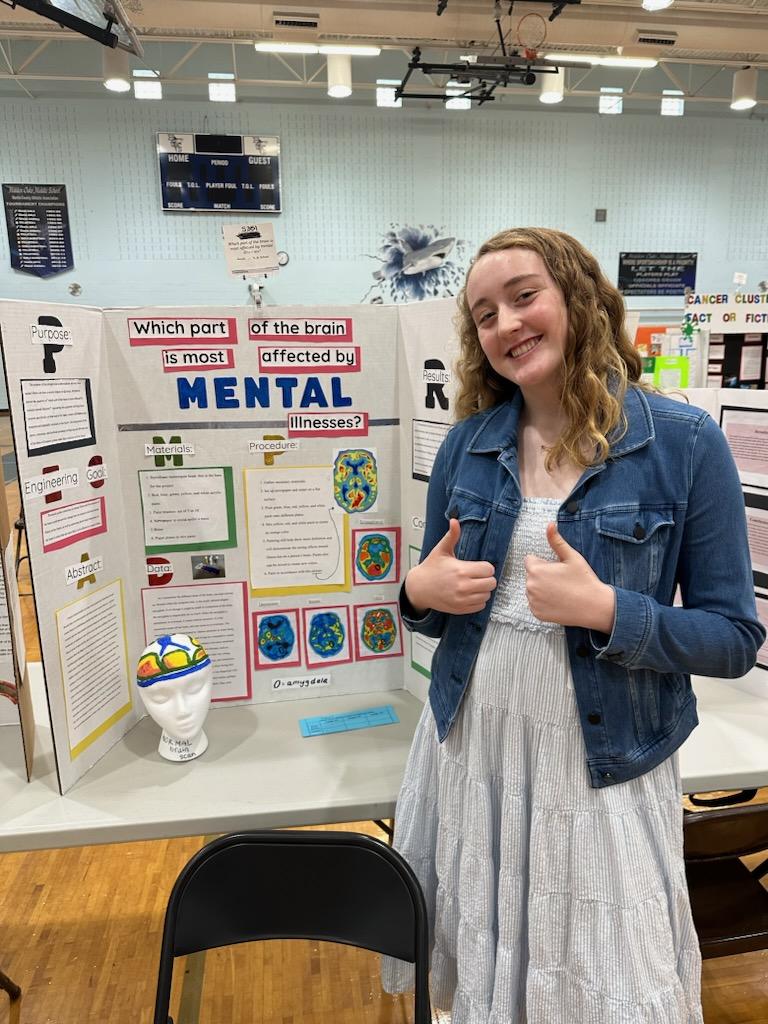
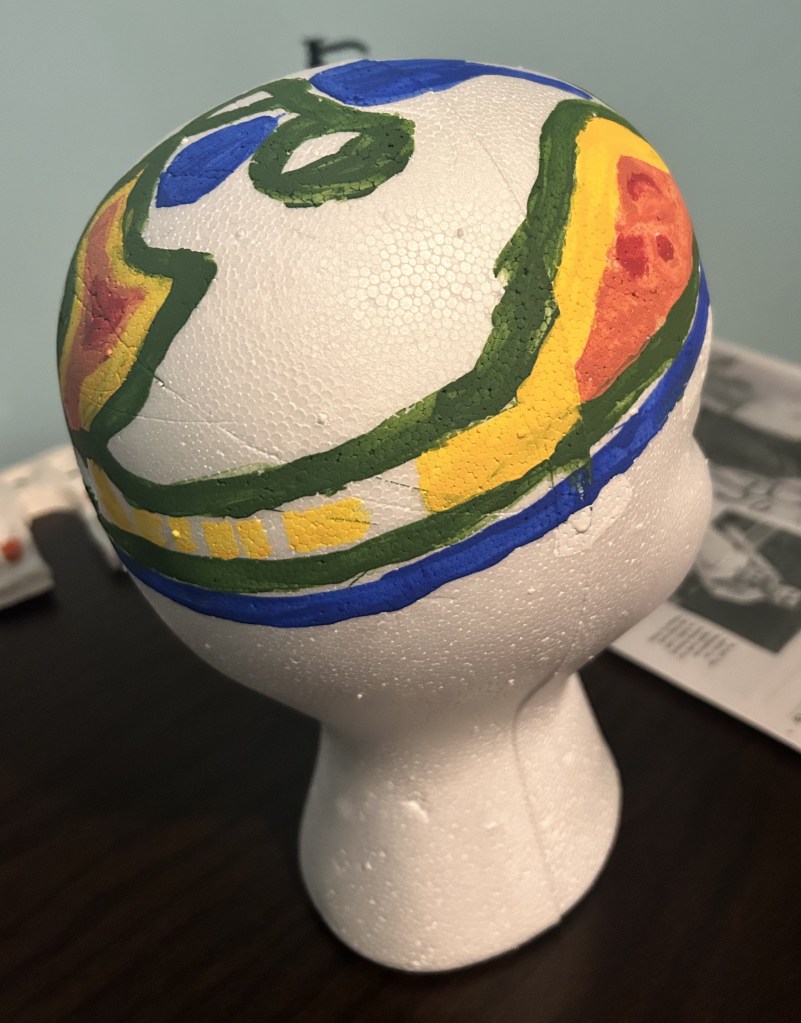
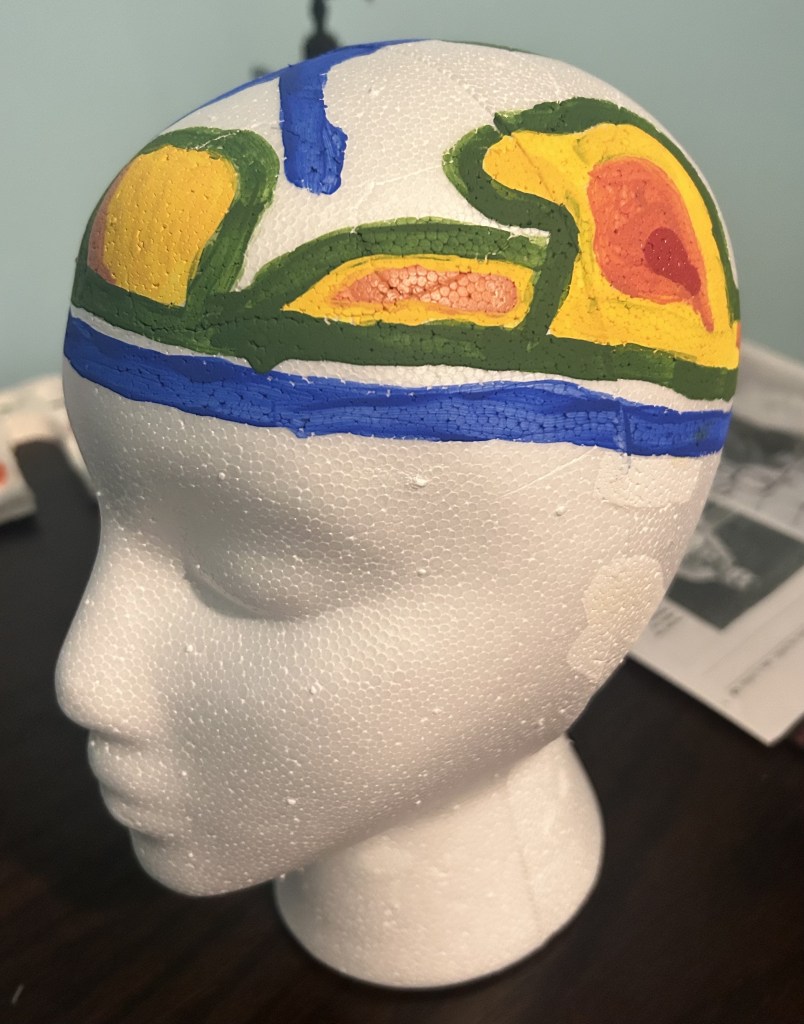
Over the course of my STEM Fair research, I found out a lot about what part of the brain mental illness most affects (my question for the research). Since I was building a model instead of conducting an experiment, I had an engineering question I had to ask instead of a hypothesis. As I researched the different areas of the brain, one kept coming up. Buried within the temporal lobe, is the small, almond-shaped amygdala. Even though it might be small in comparison to the brain, the amygdala is responsible for so much. When the amygdala is stimulated, or overused, it causes intense emotions. It is the emotional center of our brain, and can cause us to overreact. The amygdala is triggered/stimulated by intense emotions or more likely, high stress in work, relationships, and living in a competitive world. These emotions cause the amygdala to release even more emotional stress/overreactions. As seen in many mental illnesses, such as bipolar disorder or schizophrenia, victims often feel very strong emotional impulses that make them do or say crazy, and sometimes dangerous, things. An extreme example of this is when Seung-Hui Cho killed thirty-two people at Virginia Tech. He was diagnosed with schizophrenia. If he received treatment or a solution earlier, perhaps thirty-two people would be successful, happy adults. They were never given the chance to grow into an adult.

Here are some photos of my finished work and my board!

My board made it to the regional STEM Fair, but that’s where my journey with STEM Fair ended 😂. Oh well! Learned a lot and had fun with friends 😊. 

STEM Fair (Part 2)

In my last blog post, I talked about how I was doing a project on how different mental illnesses change the shape/structure of the brain. I realize that that might have been a little vague haha, and in this post I aim to dive deeper into how that actually works and share more about it. Essentially, the separate parts of the brain are inflamed or shifted when different mental illnesses have taken root in the brain. For example, a schizophrenic brain and a normal brain will look totally different when looking at brain scans.  To dive into the specifics more, each brain contains neurons, at least 100 billion of them. These neurons are essential to our brain, allowing us to do the things we can do: breathe, blink, solve complex math problems, exercise and so much more. These neurons are messengers and they send signals from our brain to our body, telling us to perform actions that we do without thinking (typing on a keyboard, turning our head, petting our dog). Neurons need to communicate with each other, and they do so through gaps called synapses. In order for the signals to interact, they need to send electrical signals across the gap. When the electrical signal is in the gap and is going to reach the other neurons, that signal releases a neurotransmitter. Some examples of neurotransmitters include dopamine and serotonin. These neurotransmitters can have a large impact on how the brain changes and how mental illness is caused in the brain. In the brains of those with depression, there are fewer amounts of serotonin passing between neurons. Since serotonin controls emotions, this can mean that there is a lack of control over what those who are depressed are feeling. Antidepressants increase the amount of serotonin passing between neurons, elevating control of moods. Another example of how neurotransmitters affect the brain is PTSD. Those who suffer from PTSD share the characteristic of having flashbacks, which norepinephrine (a neurotransmitter that kicks on when someone is in a high stress situation and elevates muscular activity, heart rate, and blood pressure) has a part in. What I’m trying to say here is that the brain is a very important part of the body, and people should start thinking of mental illness as a serious and sometimes fatal condition. Just like if your heart stopped beating, think of mental illness as if your brain stopped working. While mental illness is not as visible as a broken arm in a cast, it is far more serious not only to the person suffering from it and to others around him or her. 

Check out this site to learn more: https://stoneridgecenters.com/how-mental-illness-affects-the-brain/

STEM Fair (Part 1)

Hey, all. This is just sort of a more personal update about school. Every Freshman has to complete a STEM fair project. For my project, I decided to make several models of what the brain looks like with different mental illnesses. After researching for an idea, I found that the structure of the brain and what parts are inflamed or not change drastically with separate illnesses. I will inform everyone more about what that means and will post a picture of the final project! 😁

Policy Solutions to Improve Chronic Illness- Related Things

  1. Making sure that people with chronic illness know that it’s okay to be depressed or worried about their condition

While increasing awareness of something may not be the most obviously beneficial through stats or data, it can help, even if it’s not a top priority. People with a chronic illness are stuck with a pain they didn’t deserve or want and that is absolutely frustrating. Clearly, I don’t have a chronic illness so I can’t speak to the pain of those who do. But I can imagine that it would be horrible to live day to day with a pain that never totally goes away. In addition, people who aren’t sure what their condition is can feel even more hopeless. Adding on to the pain of their illness, they have no solution or treatment for their problems. Checking in with these people and making sure to always ask how they’re doing may help them alleviate a tiny bit of their stress and pain/fatigue. It’s okay to not be okay sometimes.

  1. Stop blaming chronic illnesses on a person’s lifestyle

Some doctors and institutions choose to turn the patient’s illness around on him/her, saying that if she just ate healthy or exercised more, she would be fine. However, this is proved wrong in the case of a person suffering from CFS (chronic fatigue syndrome), exercise will just make her/him more tired. Instead of trying to make the patient feel worse about themselves, creating a safe environment that the patient feels comfortable in will not only forge a bond between the patient and the doctor but will also allow for an open mind that is needed to discover new treatments and solutions.

  1. Create counseling programs/therapy

Again, reinforcing the idea that people suffering from chronic illnesses may need an outlet to talk and vent to. Having professional help may improve the patient’s mental state and even help them maintain a positive outlook on life. If everyday, healthy people need therapy, then why wouldn’t those suffering from an illness need to?

Disclaimer: these ideas are not designed to help the actual illness, just to help a patient’s mental state

SOURCE:

Edwards, Laurie. In the Kingdom of the Sick: A Social History of Chronic Illness in America. Bloomsbury, 2014. 

The History of Chronic Illness and How it Relates to Mental Illness

Although chronic illness and mental health are both forms of sickness, that is where one may think the similarities end. However, chronic illness and mental health are often associated as those with chronic illness may be struggling not only with keeping their body functioning, but their mind as well. To start from the beginning, let’s begin with how and when chronic illness developed and what exactly it is. Chronic illness began to emerge in high numbers in the early to middle 1900s. This is mainly due to the invention and spread of vaccines. As Laurie Edwards puts it in her book In the Kingdom of the Sick, “Enough people did not die or become crippled and incapacitated from infectious disease that they began living long enough to acquire and suffer from chronic conditions.” With the rise of vaccinations and the loss of apprehension against the government to receive them, people were living longer. Therefore, they could stay alive long enough to get sick. In the society we live in now, where we value those with the perfect body and the perfect grades with the perfect family, chronic illness doesn’t fit in. Those with chronic illness such as CFS (chronic fatigue syndrome) and PCD (primary ciliary dyskinesia) may not fit this high, high standard. This is not to say that those with chronic illnesses can’t do anything. Often, those diseases can be treated to a certain extent and can maintain some semblance of normal. But there are those that cannot. I am talking about those who have no diagnosis or no known treatment. If they cannot be treated, then it is possible that they might not be able to live a stable life. These are the ones mainly having struggles with their mental health. As mentioned in Edwards book, they often feel like society doesn’t think that they are doing enough for themselves- not working out enough, not eating healthy enough, not living as much. This can be really harmful to hear, especially to those who wish they could be doing those things, but their illness prevents it. These people may be able to control their illness on some teeny tiny level (obviously, it is better for the body to eat healthy than to eat junk), but eating healthy will not solve all their problems. Sometimes if a patient’s diagnosis has not been reached yet, it can cause severe depression and/or a sense of helplessness. These people are the ones whose chronic illness not only needs to be treated, but their mental health concerns as well.

SOURCE:

Edwards, Laurie. In the Kingdom of the Sick: A Social History of Chronic Illness in America. Bloomsbury, 2014. 

Are Mental Illness and Gun Violence Always Related?

Earlier this week, a friend of my mom’s sent me a podcast because she knew I was interested in mental illness. It was titled, “Most Violence is Not Caused by Mental Illness.” This podcast was recorded by The Daily, and produced by The New York Times. To give some background, most think of mental illness and gun violence as having an immediate connection. It is definitely true that many shootings are caused by a person’s mental illness. Take, for instance, Seung-Hui Cho, a seriously mentally ill individual, who killed 32 and injured 17. (He was not in treatment at the time of the shooting.) Due to these astonishing numbers and headlines, most of us are convinced that mental illness is the sole reason for gun violence. I must admit, I was one of those people as well, until I heard the podcast. During this 22 minute podcast, I listened to a psychiatrist being interviewed by the host of the show. Her name was Dr. Amy Barnhorst and she told her story about how, working as an emergency psychiatrist, she encountered a man who had been posting disturbing things on social media. His parents were worried enough to drop him off at the crisis unit. Now, when we think of those who have a mental illness, we usually think of rambling, sporadic, delusional people who make it quite obvious to the world that they are suffering. But when Dr. Barnhorst first saw the man, she was surprised because he did not appear to fit the outside profile of a man struggling with mental illness. This left the doctor in a bit of a situation- the man did not seem like he had a mental illness, but what would happen if she let him go and he committed a horrific crime? In the end, she decided to commit him to the psychiatric hospital. However, the judge did not find that he met 1 of the 3 criteria: that he was dangerous to himself, dangerous to others, or gravely disabled. This is all to say that a lot of the people who commit gun violence don’t meet the criteria to be involuntarily committed. There is a difference between having a severe mental illness and not being mentally well or stable. Only 4% of community violence is attributed to mental illness. That does not include those who are just moody, angry, extremely bitter young men who feel nobody respects them the way they should. These men will go to great lengths to get the attention they so desperately seek. Unfortunately, there are no medications for people who are angry at the world, as Dr. Barnhorst says. Not all who are dangerous are mentally ill, which means they cannot be admitted to a psychiatric hospital. If the mental health system was really going to try and prevent gun violence, they would have to expand the profile of a murderer to all who are sullen, depressed, resentful young men who may or may not have an interest in guns/violence. The end result would be that very, very few people out of that massive pool would go on to commit violence. Every young man who was moody would then become a threat to the world, and that is not reasonable or cost-effective.

Link Here:

https://podcasts.apple.com/us/podcast/most-violence-is-not-caused-by-mental-illness/id1200361736?i=1000565622865